
Navigation Basics for Overlanders
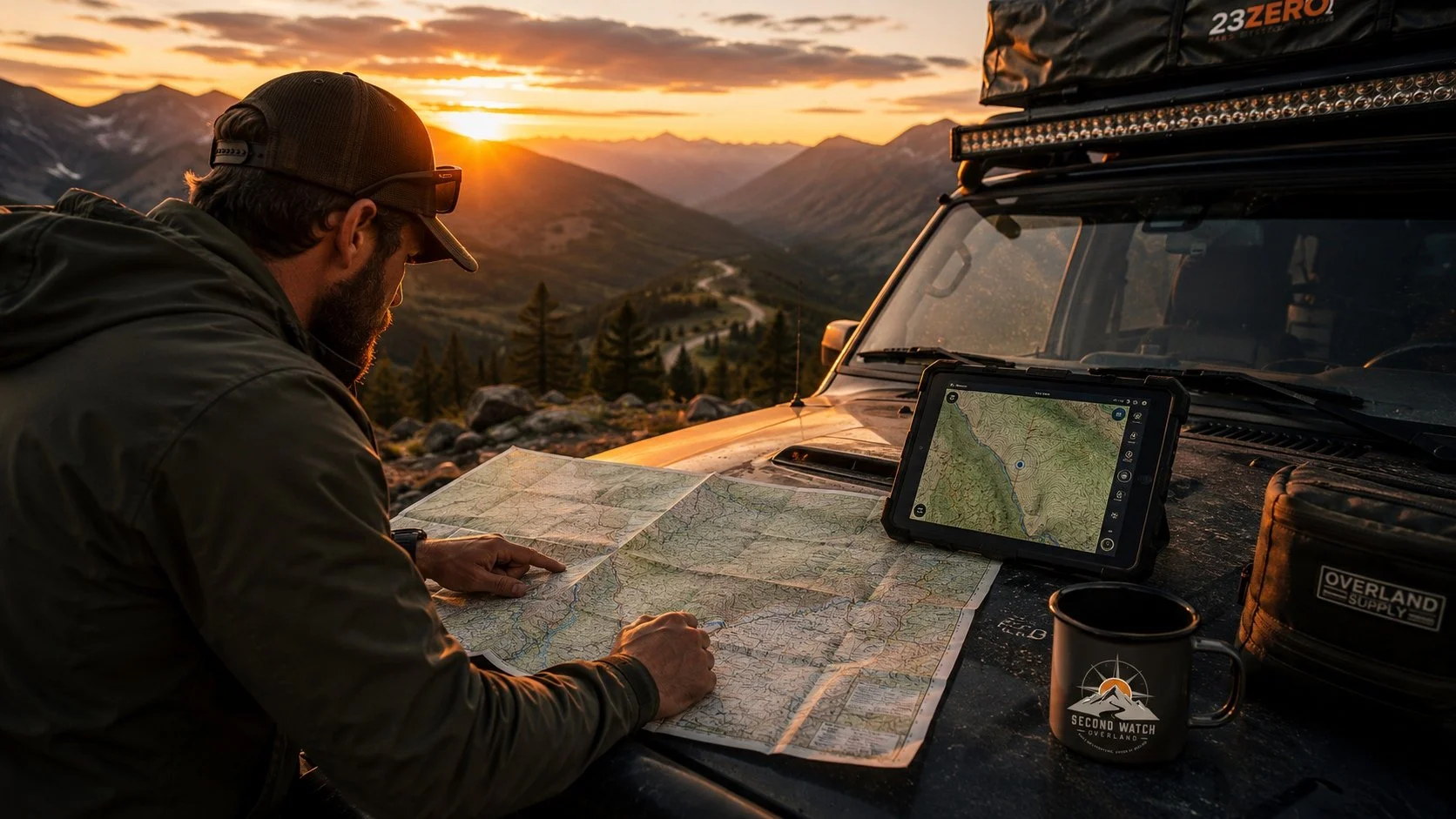
Technology Is Only Part of the Solution
Smartphones and GPS apps have transformed the way we travel, making it easier than ever to explore unfamiliar places. The challenge is that remote backroads rarely come with reliable cell service.
Good navigation combines modern technology with traditional skills. When you prepare before leaving home, you'll spend less time worrying about getting lost and more time enjoying the adventure.
Download Offline Maps
Before every trip, download maps for the areas you'll be exploring. Popular navigation apps allow you to save maps directly to your device, giving you access even when your phone has no signal.
It's also helpful to save important locations such as fuel stations, campsites, trailheads, and emergency exits before leaving home.
Offline maps should be part of every overland travel plan.
Carry a Paper Map
Electronics can fail. Batteries die. Devices overheat. Screens break.
A paper map never runs out of power and provides a broader view of the surrounding landscape than most digital screens. Even if you rarely use it, carrying one adds another layer of confidence when traveling in remote areas.
Learning basic map reading is a valuable skill that every overlander should develop.
Know Your Route
Spend time researching your destination before departure.
Read recent trail reports, understand seasonal closures, and estimate realistic travel times. Gravel roads and mountain trails often take longer to drive than expected.
Always identify backup campsites and alternate routes in case weather or road conditions force a change of plans.
Pay Attention to Your Surroundings
Navigation isn't only about following a screen.
Notice landmarks, road signs, creek crossings, mountain ranges, and changes in terrain. These natural reference points help confirm you're on the correct route and improve your overall awareness.
The more attention you pay to your surroundings, the less dependent you'll become on technology.
Quick Tips
Download offline maps before every trip.
Carry a paper map.
Bring extra charging cables and battery packs.
Research seasonal closures.
Save fuel station locations.
Plan alternate routes.
Watch for natural landmarks.
Frequently Asked Questions
What's the best navigation app?
Several excellent apps exist. The best choice is one that offers reliable offline maps and detailed public land information.
Do I really need paper maps?
Yes. They provide an important backup when electronic devices fail.
Should I rely on my vehicle's navigation system?
Factory navigation systems are useful, but many lack detailed backcountry road information.
